01
Build the line
The work starts with a line composition made with code. Different versions are tested before one is chosen and prepared for the plotter.
Each work starts with a line composition made with code. The plotter moves a pen along the prepared path on paper or a brush through acrylic paint on canvas. The movement is programmed, but ink and paint behave a little differently each time.
The work starts with a line composition made with code. Different versions are tested before one is chosen and prepared for the plotter.
The line is scaled to the paper or canvas. Tool height and movement speed are set for the surface and for either the brush or pen.
On canvas, acrylic colours are placed on the surface and the plotter moves a brush along the prepared path, carrying and mixing the paint. On paper, the plotter moves a pen along the prepared path and draws in ink.
The work is watched while the plotter runs. Tool height, speed, or paint can be adjusted when needed. After it dries, Arcos decides whether to sign and release it or keep it in the archive.
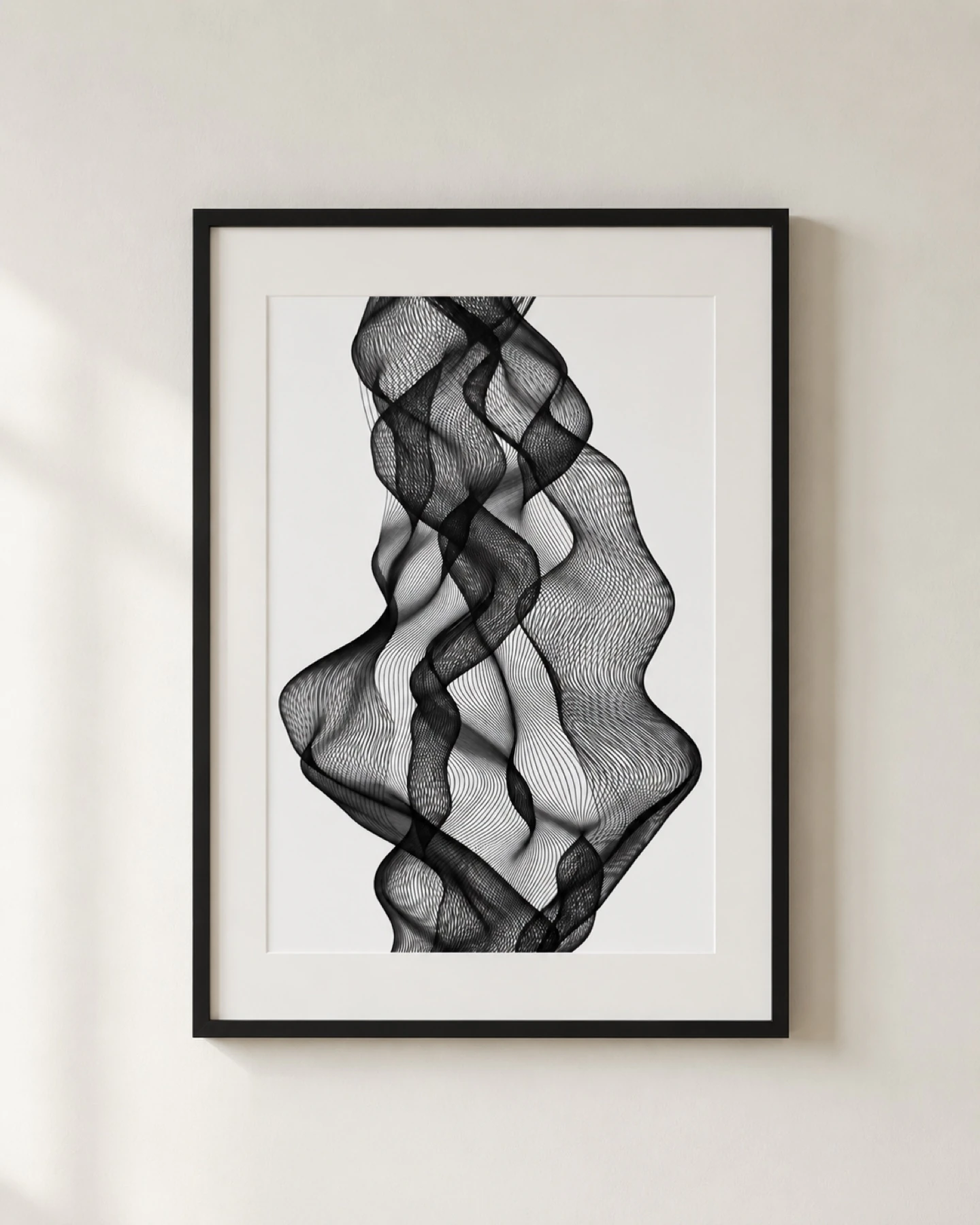
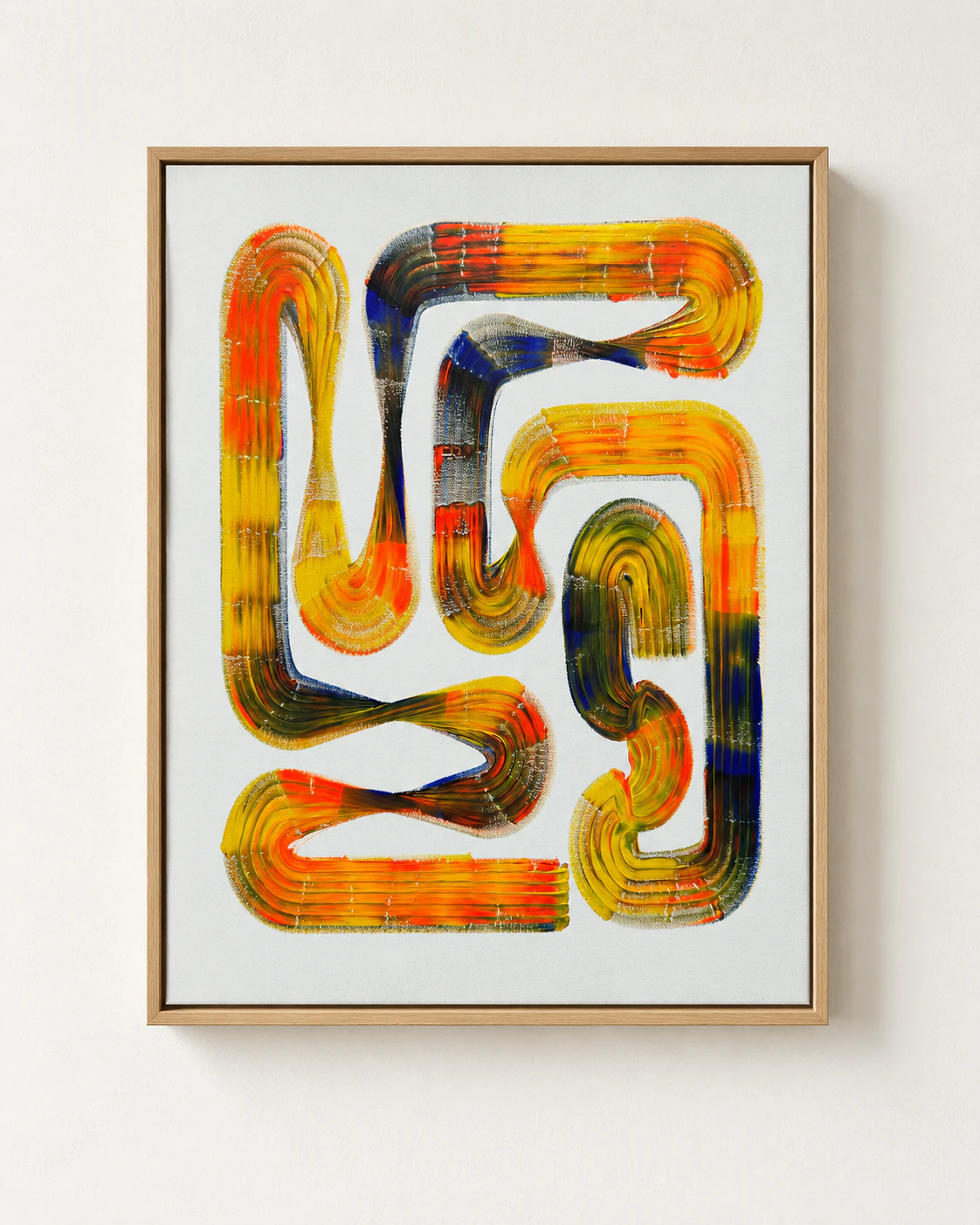
How Lineage moves from a line made with code to acrylic paint, brush movement, colour mixing, drying, and final selection.
A practical overview of one Arcos workflow from code and SVG to plotter movement, ink, acrylic paint, paper, and canvas.