What Makes an Arcos Work an Original?
The original is the finished work on paper or canvas, not the SVG used to guide the plotter.
A plain explanation of what makes each Arcos work one-of-one and what a collector receives.
View related workAn Arcos work can begin with code, but the code is not the artwork. The digital line is used to guide a plotter that moves a technical pen on paper or a brush through acrylic paint on canvas.
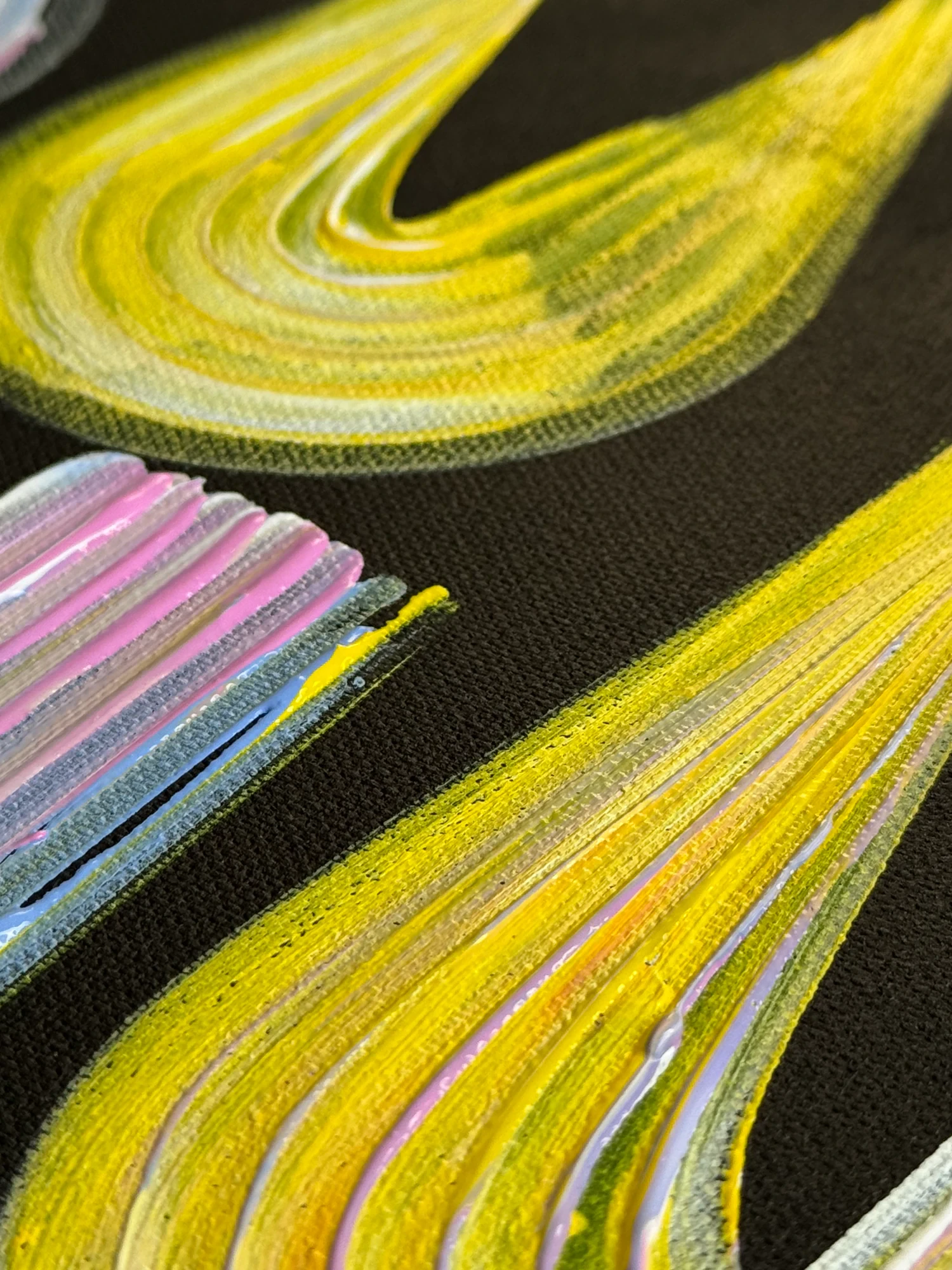
The original is the finished work on paper or canvas. That is where the real scale, ink, paint, edges, overlaps, texture, and small variations exist.
The SVG is a working file
Once a line composition is chosen, it is exported as an SVG and prepared for the size of the paper or canvas. The file tells the plotter where to move.
It does not contain the finished ink line, the way paint mixes under the brush, or the texture of the paper or canvas. Those only appear when the work is made.
One work, one surface
Each released piece is treated as a one-of-one original. A related line can be explored again, but a new surface and a new working session create a different artwork.
A photograph documents the work but is not the work itself. The original remains the signed physical piece.
What the collector receives
The collector receives the signed artwork described on its page, with the confirmed medium, size, and availability.
The code, SVG, and other process files remain working materials. They help explain how the piece was made, but they are not part of the artwork being sold.