What the Plotter Does - and What It Doesn't
The machine follows a prepared path. The artistic decisions happen before, during, and after that movement.
A straightforward explanation of the plotter's role in Arcos works and where the artist's decisions remain.
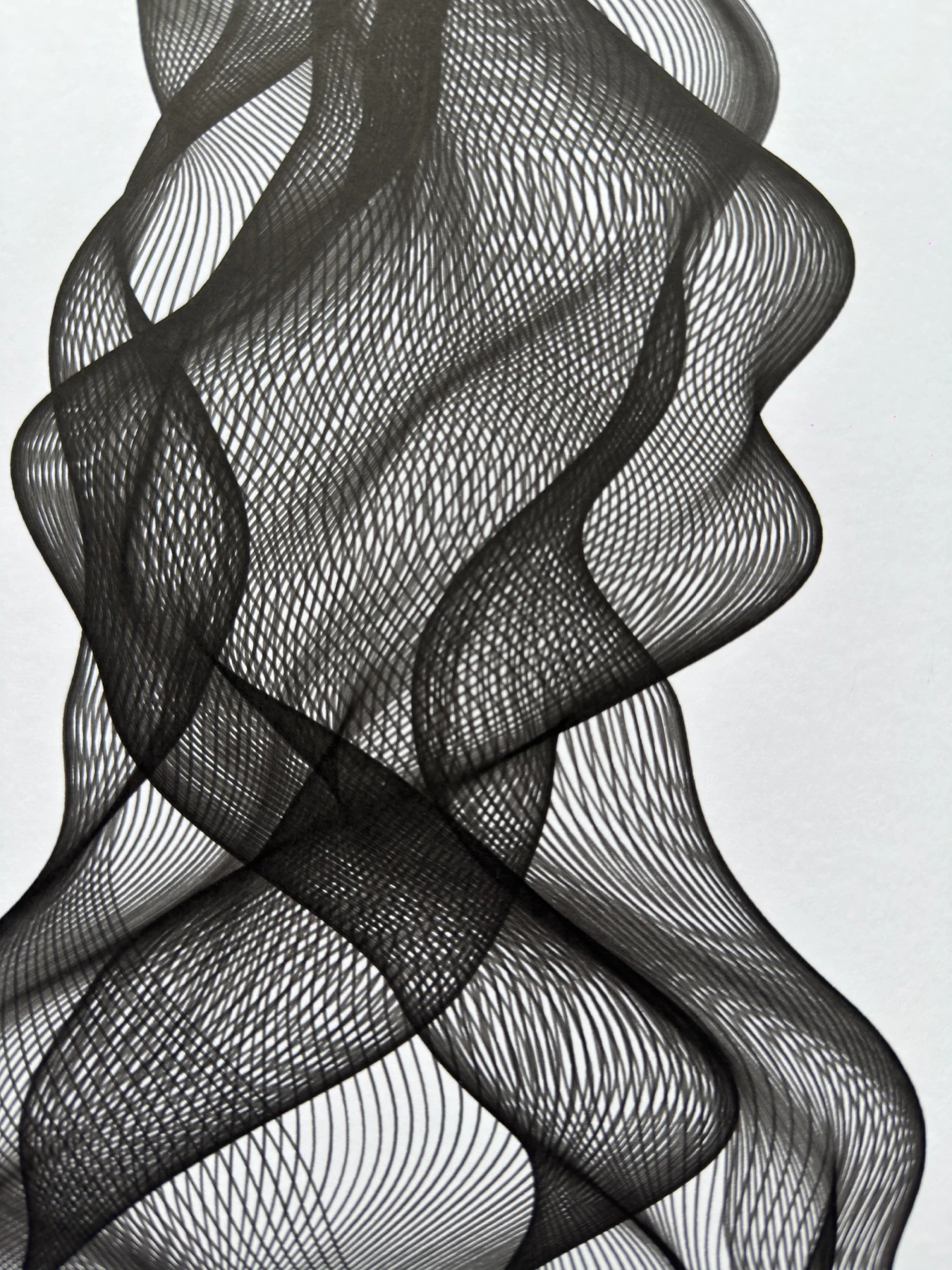
View related workA plotter can look automatic because it moves from coordinates. In Arcos works, it is used as a tool for carrying out a prepared line.
It does not decide which line to use, which surface to work on, which colours or ink to choose, or whether the finished result should be released.
Before the plotter moves
Arcos develops the line system, reviews different results, chooses a composition, sets its scale and position, and selects the tool and surface.
For acrylic works, the colours are also placed on the canvas before the brush begins moving.
During the work
The process is watched while the plotter runs. Tool height, speed, or paint can be adjusted if needed.
Not every irregularity is corrected. Paint mixing, brush drag, ink flow, and the surface itself are allowed to remain part of the work.
After the plotter stops
The completed drawing or painting is reviewed as a whole. Only selected works are signed and released.
The plotter completes a path. It does not decide whether the result works as an artwork.